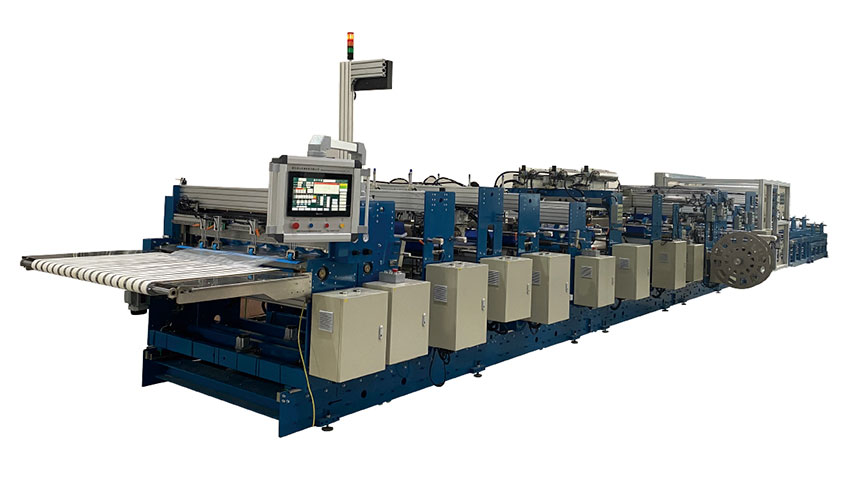
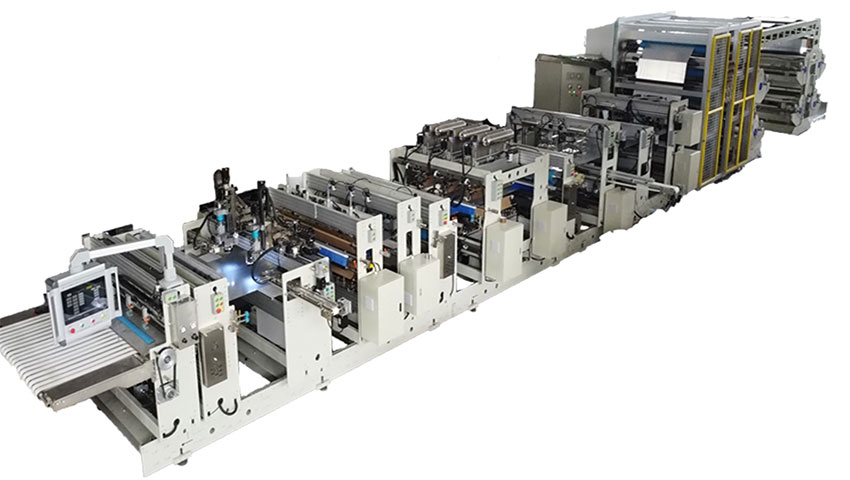
Less Downtime, Less Noise: How Mingli Solved the 2 Problems in Bag-in-Box Production
Apr 01, 2026
Industry Insight
2 Main Problems of Bag-in-Box Making Machines
During production, traditional bag-in-box making machines often face the following 2 major challenges:
Challenge 1: Frequent Replacement Disrupts Production
When producing bag-in-box for different liquids, the corresponding valves must be replaced accordingly. Although all these valves follow the internationally standard 1-inch specification, their shapes vary considerably due to different manufacturers. This creates a challenge: each valve type requires adjustments to the sorting bowl components — specifically, replacing the vibratory bowl and tracks. Given the wide variety of valves and the complexity of changeovers, manufacturers are forced to stock a large inventory of different parts. The time workers spend on changeovers and recalibration adds up quickly, seriously undermining overall production efficiency.
Challenge 2: Noise Limits Where and How the Machine can be Used
Conventional sorting equipment typically operates at noise levels between 75 and 85 dB — some units even higher — comparable to standing alongside a busy road with continuous traffic. Workers cannot remain near the machine for extended periods, and the equipment cannot be placed in environments that require quiet, such as offices or laboratories. This noise pollution effectively confines the machine to the factory floor, making it unsuitable for any other setting.
What Did Mingli Do to Solve these Issues?
Through years of research and development, Mingli has engineered bag-in-box making machines that decisively overcome these challenges.
Solution 1
To eliminate the hassle of frequent replacement, we adopted a universal clamping system. Without any mechanical adjustments, the sorting bowl automatically accommodates different valves — including those used for milk bag-in-box, wine bags, juice bags, oil bag-in-box, and water bags. Workers no longer need to swap out components when switching between production runs. In addition, the sorting bowl features a multi-station, modular design capable of holding hundreds of valves at a time. Together, these innovations eliminate unnecessary downtime and significantly boost production efficiency.
Solution 2
The sorting bowl achieves its dramatically reduced noise levels through 3 engineered stages:
1
Precision Linear Motor & Ultra-Quiet Drive System — Minimizes mechanical impact and friction noise at the source
2
Advanced Dynamic Balancing — An active vibration-isolation base prevents vibration from transferring to the machine frame and floor
3
Intelligent Motion Control — Optimizes motor start/stop sequences and speed profiles to eliminate resonance peaks and sudden high-pitched noise
Through the combined effect of these 3 stages, noise levels are drastically reduced to under 60 dB — true library-level silence. This means production can take place anywhere, at any time: whether demonstrating the machine live to clients in a showroom, running overnight to fulfill urgent orders, or deploying the equipment in non-industrial settings — all without noise restrictions.
Equally important, workers are no longer exposed to harmful noise levels, benefiting both their physical and mental well-being.
Equipped with this advanced sorting system, our bag-in-box making machines function as a compact, all-purpose "platform" — transforming the pain points of small-batch, multi-product manufacturing into a genuine competitive advantage.
If you're looking to establish a strong foothold in bag-in-box production and expand your order-handling capabilities, Mingli's bag-in-box making machines are well worth a closer look.